Planning a trip to Europe from the UK? Before you book your flights, there is one thing you need to get right: your Schengen visa types. Applying for the wrong one is one of the most common and most avoidable mistakes UK travellers make. This guide breaks down every type of Schengen visa, who needs what, and how to make sure your Schengen visa application goes smoothly.
What Is a Schengen Visa?
A Schengen visa is a travel permit that allows entry into the Schengen Area countries a zone of 29 European countries that have abolished border controls between them. Since Brexit, UK passport holders are treated as third-country nationals, which means you now need a Schengen visa if you plan to stay in Europe for longer than 90 days, or if your purpose of visit requires a specific permit.
For short visits under 90 days such as holidays or business trips do UK citizens need a Schengen visa? Currently no, UK citizens can enter the Schengen Area visa-free. However, once ETIAS launches in 2026, even visa-free travellers will need to register online before travelling.
Types of Schengen Visa Explained
There are three main Schengen visa types: Type A, Type C, and Type D. Here is what each one covers:
Type A — Airport Transit Visa
An Airport Transit Visa (ATV) is required for certain travellers changing flights at Schengen airports, even if they remain in the international transit area. It helps strengthen airport security and supports effective immigration management, as outlined by the European Commission
UK passport holders do not need a Type A visa. However, if you hold a non-UK passport and are transiting through a Schengen airport on your way to another destination, you may need one depending on your nationality. Citizens of countries including Afghanistan, Pakistan, Nigeria, Iran, Iraq, and Somalia are among those currently required to hold an ATV for airport transit.
Type C — Short-Stay Visa (Tourist/Business)
The Type C Schengen visa is the most common type and the one most relevant to UK-based travellers applying on a non-UK passport. It allows stays of up to 90 days within any 180-day period across all 29 Schengen member states governed by the 90/180-day rule.
Type C visas cover a wide range of purposes, including:
- Tourism and holidays
- Visiting family or friends
- Short business trips and meetings
- Cultural or sporting events
It is also available in three entry formats:
Single-entry — allows one entry into the Schengen Area. Once you leave, the visa becomes invalid even if the validity period has not expired.
Double-entry — allows two entries. Useful if you plan a short trip outside the Schengen Area (for example, a visit to the UK or a non-Schengen country) and want to re-enter.
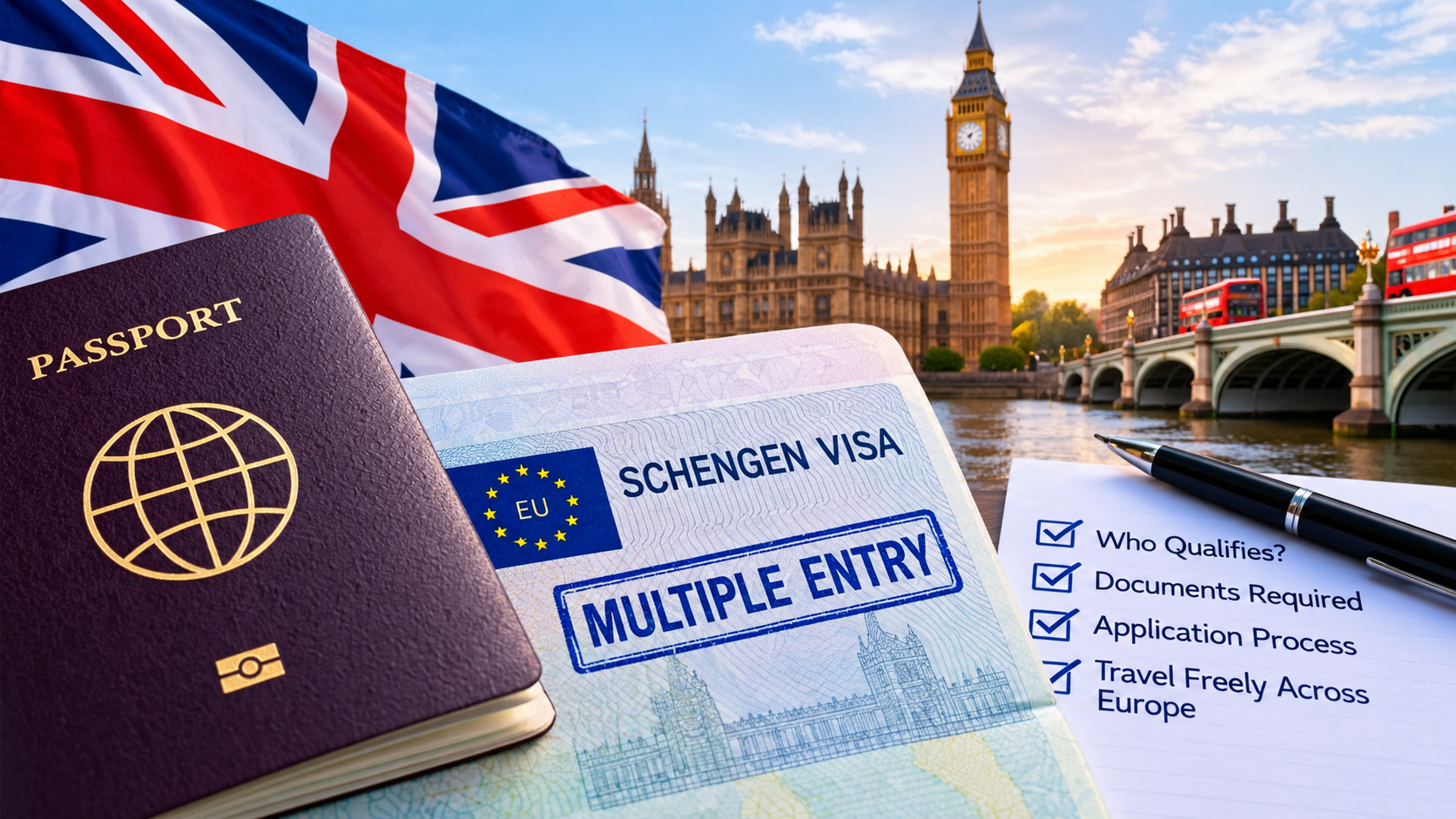
Multiple-entry visa — allows unlimited entries and exits throughout the visa’s validity, as long as the 90/180-day rule is respected. This is the most flexible option and is typically granted to frequent travellers with a strong application history.
For a full breakdown of the 90-day rule and how it applies to UK residents, see our guide on the Schengen 90/180-day rule explained.
Type D — Long-Stay National Visa
If you plan to stay in a specific Schengen country for more than 90 days for work, study, family reunification, or residency you will need a Type D national visa also called a long-stay national visa. This is issued by the individual Schengen country you intend to live in, not the Schengen Area as a whole.
Although a Type D visa is technically a national visa rather than a Schengen visa, it does allow its holder to travel freely within the rest of the Schengen Area for up to 90 days in any 180-day period during its validity.
Common Type D visa categories include:
- Work visa — for those taking up employment in a Schengen country
- Student visa — for those enrolled in a full-time course lasting more than 90 days
- Family reunification visa — for joining a spouse or dependant living in the Schengen Area
Which Schengen Visa Do I Need?
Here is a quick guide based on your situation:
Going on holiday to Europe for under 90 days as a UK passport holder? You do not currently need a Schengen visa but you will need ETIAS once it launches.
Travelling to Europe on a non-UK passport? You will likely need a Type C short-stay visa for tourism or business.
Transiting through a Schengen airport on a passport from a listed country? You will need a Type A Airport Transit Visa.
Planning to work, study, or live in a Schengen country for more than 90 days? You will need a Type D national visa from your destination country.
Not sure which category applies to you? Our team at Euro Holidays can guide you through the Schengen visa application process step by step.
Documents Required for a Schengen Visa Application
Regardless of which type of Schengen visa you are applying for, you will generally need the following:
- Valid passport (issued within the last 10 years, valid for at least 3 months beyond your planned departure date)
- Completed and signed Schengen visa application form
- Two recent passport-sized photographs
- Travel insurance for Europe from the UK with minimum €30,000 medical coverage see our guide on best travel insurance for Europe
- Proof of accommodation (hotel bookings, invitation letter, etc.)
- Proof of sufficient funds
- Return flight itinerary
- Proof of purpose of visit (employment letter, university acceptance, etc.)
Always check the specific Schengen visa requirements UK with the consulate of the country you are applying to, as documentation can vary.
When Should I Apply?
Submit your Schengen visa application no earlier than 6 months and no later than 2 weeks before your travel date. Given that Schengen visa appointment slots fill up quickly particularly during summer we recommend applying at least 8 to 12 weeks in advance wherever possible.
For help booking your Schengen visa appointment or understanding the latest requirements, our team is here to help.
Frequently Asked Questions
Do UK citizens need a Schengen visa?
For stays under 90 days, UK passport holders can currently travel to the Schengen Area visa-free. However, ETIAS a pre-travel authorisation system is expected to launch in late 2026 and will apply to all UK visitors.
What is the difference between a Type C and Type D Schengen visa?
A Type C Schengen visa covers short stays of up to 90 days for tourism, business, or family visits. A Type D national visa is issued for stays exceeding 90 days, such as work or study.
Can I extend my Schengen visa once I am in Europe?
Extensions are only granted in exceptional circumstances, such as a medical emergency or force majeure. Overstaying your Schengen visa can result in fines, deportation, and a future entry ban.