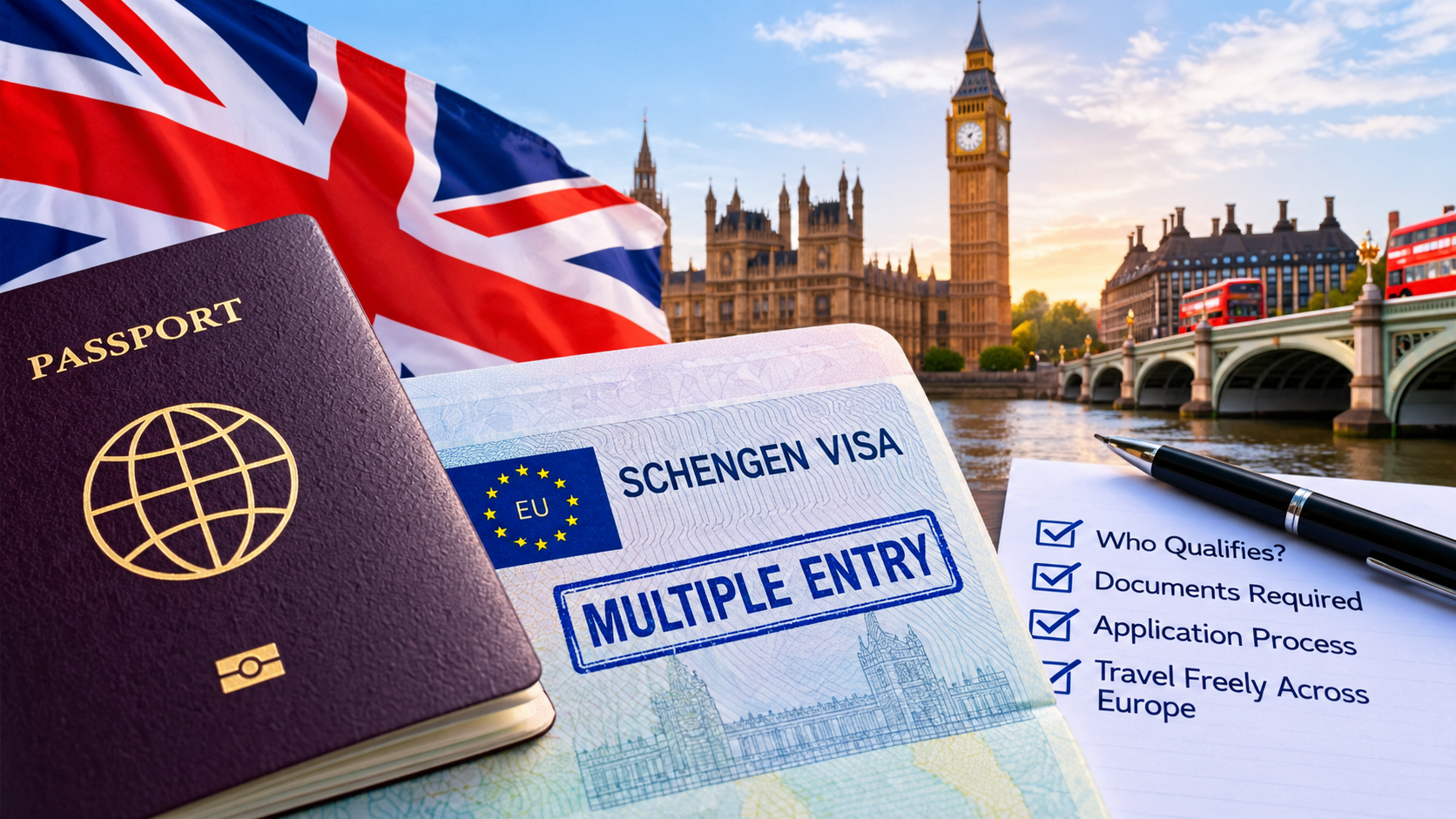

If you’re asking which Easiest Country to Get a Schengen Visa 2026, the short answer is Iceland, Latvia, and Lithuania. But for UK residents, BRP holders, and non-visa-exempt nationals, the full picture matters just as much.
While the official rules are technically the same across all 29 Schengen countries, not every consulate is equal. Some reject nearly a third of applicants, while others approve over 95%.
This 2026 guide breaks down the easiest countries to apply to, real rejection statistics, and how to navigate the appointment booking bottleneck.
Before we dive into the details, here’s the quick version. Based on European Commission immigration data, these countries currently offer the highest approval odds:
- Iceland – rejection rate below 3%
- Latvia, Lithuania & Estonia – approval rates of 95–97%
- Finland – approval rate above 93%
- Switzerland – strict but efficient and predictable
- Luxembourg – low application volume, favourable outcomes
Now let’s look at why that’s the case, and what it actually takes to get approved.
The Schengen Landscape in 2026: What Has Changed?
European travel has become increasingly digitised. With new EU digital frameworks rolling out, and stricter monitoring of travel histories, consulates are now more sensitive to document compliance than ever.
The post-pandemic travel boom hasn’t slowed down either. France, Spain, and Italy still receive millions of applications every year. This creates two recurring problems:
- Long processing times, plus automated rejections over minor paperwork errors.
- A shortage of visa slots across major third-party portals like VFS Global, TLScontact, and BLS International.
This is exactly why more travellers are asking which Schengen country is easiest to get a visa from. Smart applicants simply target countries with lower application volumes and higher approval rates and skip the bottleneck entirely.
How Long Does a Schengen Visa Take in 2026?
While the official processing time is 15 calendar days, the actual wait time depends entirely on your chosen country and application volume:
- The Fast Track (5 to 10 Days): Low-volume countries like Iceland, Slovakia, and Lithuania regularly return passports within a week.
- The Bottleneck (3 to 4 Weeks+): High-demand consulates like France, Spain, and Germany face massive backlogs, especially during peak summer or winter holidays.
Key factors that slow down your application include:
- Missing Paperwork: A single incorrect document can cause immediate delays or rejections.
- Extra Background Checks: Certain nationalities require mandatory security screenings between Schengen states, adding several days to the timeline.
Pro-Tip: You can legally apply up to 6 months in advance. To avoid trip-ruining delays, always aim to lock in your slot 4 to 6 weeks before your flight.
Top 10 Easiest Schengen Countries to Apply to in 2026
Based on European Commission immigration data and real time processing feedback, these five nations represent your best statistical chance of securing a visa.
- Iceland (The Lowest Rejection Rate)
Iceland consistently holds the crown for the lowest rejection rate in the entire Schengen Zone, frequently dropping below 2.5% to 3%.- The Advantage: Because it does not attract massive migrant volumes, consular staff evaluate files individually rather than relying on strict, automated filtering.
- Processing Speed: Often yields turnaround times within 5 to 10 working days.
- Ideal For: Travelers who want absolute peace of mind and are planning a scenic Nordic trip.
- Slovakia (The Empty Embassy Advantage)
Slovakia ranks exceptionally high for approvals because it receives one of the lowest volumes of applications in Europe.- The Advantage: The lack of embassy congestion means visa officers have the time to review profiles leniently instead of rushing to reject them.
- Processing Speed: Standard processing takes between 10 to 15 working days.
- Ideal For: First-time applicants looking for a stress-free entry route through Eastern Europe.
- Italy (The High-Volume Approver)
Italy is a massive tourism hub that compensates for its high applicant numbers by approving hundreds of thousands of visas annually.- The Advantage: Their high approval ratio means that as long as your daily itinerary makes sense, they willingly grant visas.
- Processing Speed: Takes around 15 to 30 working days due to heavy seasonal application queues.
- Ideal For: Applicants with clear holiday plans who can manage booking their appointments early.
- Romania (The Fresh Schengen Gateway)
Romania’s recent full integration into the Schengen framework makes it highly eager to welcome international tourists.- The Advantage: The embassy is currently maintaining a very relaxed and highly flexible stance on tourist applications to boost arrivals.
- Processing Speed: Efficient turnaround times varying between 10 to 15 working days.
- Ideal For: Budget-conscious travelers wanting an easy, low-risk entry point into the EU.
- Switzerland (The Clockwork Precision)
Switzerland is world-famous for running a transparent, merit-based visa process that respects the applicant’s time.- The Advantage: If you provide exactly what is on their checklist, the system approves your file without any arbitrary delays.
- Processing Speed: Incredibly fast, with decisions usually delivered within 7 to 12 working days.
- Ideal For: Salaried professionals with meticulous paperwork and clean bank records.
- Hungary (The Flexible Scrutiny)
Hungary serves as a strategic and highly accessible gateway for travelers entering Central Europe.- The Advantage: Their financial and document scrutiny is considerably more relaxed compared to neighboring Western European states.
- Processing Speed: Most applications are finalized within 10 to 15 working days.
- Ideal For: Travelers who want a high probability of success without facing overly strict financial questioning.
- Norway (The Transparent Path)
Norway takes all the guesswork out of the visa process by keeping its requirements perfectly straightforward.- The Advantage: They do not use hidden criteria; satisfying the clear terms on their checklist ensures an approval.
- Processing Speed: Consistent timelines averaging between 15 to 20 working days.
- Ideal For: Applicants who have well-documented employment histories and clean tax returns.
- Greece (The Tourism Booster)
Greece heavily relies on holidaymakers to fuel its economy, translating to massive visa issuance numbers year-round.- The Advantage: Consular staff look very favorably upon genuine vacationers, making approvals smooth for family trips.
- Processing Speed: Varies between 15 to 21 working days depending on the time of the year.
- Ideal For: Families and tourists looking to enjoy a classic Mediterranean summer or winter holiday.
- Austria (The Merit-Based Predictability)
Austria treats every visa file with absolute fairness, relying heavily on a highly organized scheduling system.- The Advantage: Genuine tourists with a clean travel history face almost no threat of random or unexplained rejections.
- Processing Speed: Highly reliable turnarounds within 10 to 14 working days.
- Ideal For: People with authentic travel histories who strictly avoid unverified hotel bookings.
- Luxembourg (The Premium Safe Haven)
Luxembourg is a wealthy, compact nation that remains heavily overlooked by the general pool of visa applicants.- The Advantage: The tiny volume of daily files allows officers to highly appreciate strong, individual profiles.
- Processing Speed: Swift handling that gives out final answers within 10 to 15 working days.
- Ideal For: High-income individuals and business owners looking for a premium, high-success option.
The Hardest Countries: Where to Expect Delays and Rejections
To understand why choosing an “easy” country matters, it helps to look at the opposite end of the spectrum. If you can avoid it, try not to make these high-risk countries your main destination or primary point of entry:
- Malta: Historically holds one of the highest rejection rates in Europe, sometimes turning down over 30% of applicants due to strict local security policies.
- France & Spain: While they grant the most visas numerically, they also receive the highest volume of applications. This causes massive delays in tracking UK visa appointment openings and a higher chance of quick rejections for minor itinerary inconsistencies.
Schengen Visa 2026: Which Countries Have the Lowest Refusal Rates?
| Category | Schengen Country | Key Facts |
|---|---|---|
| Lowest refusal rate | Slovakia | One of the lowest refusal rates, although based on a relatively small number of applications. |
| Most visas issued | France | France issued the highest number of Schengen visas, with around 2.65 million applications approved. |
| Highest refusal rate | Malta | Malta recorded one of the highest refusal rates among Schengen countries. |
The Golden Rule: The Main Destination Policy
Before you choose an easy country to speed up your process, you must understand the strict Schengen Visa Code. You cannot simply apply to Iceland because it is easy and then spend your entire 2-week holiday in Paris.
According to the rules, you must file your application with the consulate of the country that serves as:
- The Main Destination: The country where you will be spending the highest number of nights.
- The First Point of Entry: If you are spending an equal number of nights in multiple countries (e.g., 4 nights in the Netherlands and 4 nights in Germany), you must apply to the country you land in first.
Warning: Attempting to bypass this rule with fake hotel bookings or “visa shopping” can lead to your visa being canceled at the border control gate, followed by an immediate deportation and a flag on your European immigration profile. Always ensure your flight paths and hotel vouchers match your visa application state.
The Real Bottleneck: Securing the Appointment Slot
Knowing which country has a 97% approval rate means nothing if you cannot physically hand over your passport. For UK residents and BRP holders, the true battle isn’t the consulate’s decision it’s the brutal competition on scheduling portals.
For example, trying to find an active opening for a popular destination like a schengen visa netherlands uk sticker can involve weeks of sleepless nights refreshing screens, encountering IP blocks, and fighting automated script bots.
To maximize your chances, your strategy must look at real-time slot availability across all primary UK biometric appointment locations, including:
- London: The highest volume center, but also the fastest to sell out.
- Manchester: Excellent for applicants in the North, with slightly less morning rush traffic.
- Edinburgh: The ideal choice for Scottish residents, often showing distinct scheduling trends compared to English centers.
5 Practical Steps to Guarantee an Approved Visa in 2026
Regardless of which country you apply through, implementing these five operational practices will protect your profile from being rejected:
1. Master the 3-Month Financial Rule
Consulates want to see stability. Provide 3 consecutive months of current account bank statements. Ensure your balance comfortably covers your hotel costs plus a minimum of £50–£100 per day of stay. Crucial: Avoid sudden, massive cash deposits right before printing your statements. Consulates flag unexplained “fund dumping” as a high-risk indicator.
2. Secure True Schengen Travel Insurance
Your insurance certificate must explicitly state that it covers the entire “Schengen Area” or “Europe Worldwide.” It must have a minimum medical coverage of €30,000, include full repatriation coverage, and feature a zero-deductible/excess policy if possible.
3. Clear Employment and BRP Verification
Your UK Residence Permit (BRP) or digital status must be valid for at least 3 months beyond your planned departure date from the Schengen Zone. Additionally, your employer letter should be dated within 30 days of your appointment, confirming your role, salary, and approved leave dates.
4. Beat the VFS Portal Firewalls
If you are tracking a UK visa appointment slot yourself, never refresh the booking calendar more than 3 times within a single hour. Over-refreshing flags your residential IP address, triggering a temporary system block or locking your profile out for 24 to 48 hours. Always clear your browser cache or use incognito windows to see real-time slot releases.
Let Fast Holidays Secure Your European Gateway
Navigating the shifting rules of European consulates, tracking unpredictable calendar drops, and organizing flawless paperwork is a full-time job. One tiny mistake can result in a wasted visa fee and a ruined summer holiday.
At Fast Holidays, we take the guesswork out of the equation. Whether you are targeting a high-approval Baltic country, planning an alpine getaway via Switzerland, or trying to secure a competitive schengen visa netherlands uk biometric slot, our dedicated team handles the hard work for you.
We monitor real-time availability across all UK biometric appointment locations, optimize your documentation pack to meet strict 2026 guidelines, and ensure your application profile is completely bulletproof before you step into the center.
FAQ’s
Which Schengen country is the easiest to get a visa in 2026?
Iceland, Latvia, and Lithuania are the easiest. They receive fewer applications, resulting in less backlog and a 95%+ approval rate.
How long does approval take?
Officially 15 days. However, easy countries (like Iceland) take 5–10 working days, while busy countries (like France or Spain) can take 3–4 weeks.
Why are slots so hard to find from the UK?
High travel demand completely overloads VFS Global portals. Highly competitive slots, like a schengen visa netherlands uk appointment, sell out within minutes of being released.
What is ETIAS and do I need it in 2026?
ETIAS is a new online travel authorization system for visa-exempt travelers entering Europe (similar to the US ESTA).
UK Passport Holders: Yes. Because you currently travel visa-free, you will need to apply online for an ETIAS once the system officially launches in late 2026.
UK BRP Holders: No. If you hold a passport (e.g., Indian, Pakistani, Bangladeshi) that requires a standard sticker visa (like a schengen visa netherlands uk), ETIAS does not apply to you. Your standard visa process remains exactly the same.